
Lonestone established shared governance to support its growth
Notion tables gave way to roles anyone can see on one screen. Newcomers work out who does what in their first week.
Sector: Product Studio | Team size: 35 employees
Lonestone helps clients build SaaS products, apps, video games, and websites to the highest quality standards.
Expertise in Product Strategy, Management, Design, Dev, Data, and Cybersecurity for prestigious clients across France for over 9 years.
Lonestone gives its teams a real say in how the company is run, on a shared view of governance.
Rolebase saves our teams a tremendous amount of time. We can easily find everyone's different roles, every meeting has clear next steps, and it greatly simplifies how we organize secondary roles.
Ronan Letellier, Co-founder
The Challenge
Lonestone was co-founded by a group of friends whose vision and experience in the workplace led them toward horizontal management methods, aligned with their values.
To take on increasingly ambitious projects, the team grew by bringing in experts from diverse backgrounds and skill sets.
Organizing these teams and ensuring smooth studio operations required applying structured methods. They drew inspiration from Holacracy, Sociocracy, and agile methodologies.
However, any method needs proper tools to be sustained over time. Systems were built in Notion, but they became limiting:
- Visualization: Roles were stored in tables, creating a real maze that made it hard for newcomers to get oriented.
- Data loss: A deleted database that didn't appear in Notion's history is a real problem when all meeting minutes were stored there.
- Lack of granularity: Secondary roles essential to the company's smooth operation were poorly represented.
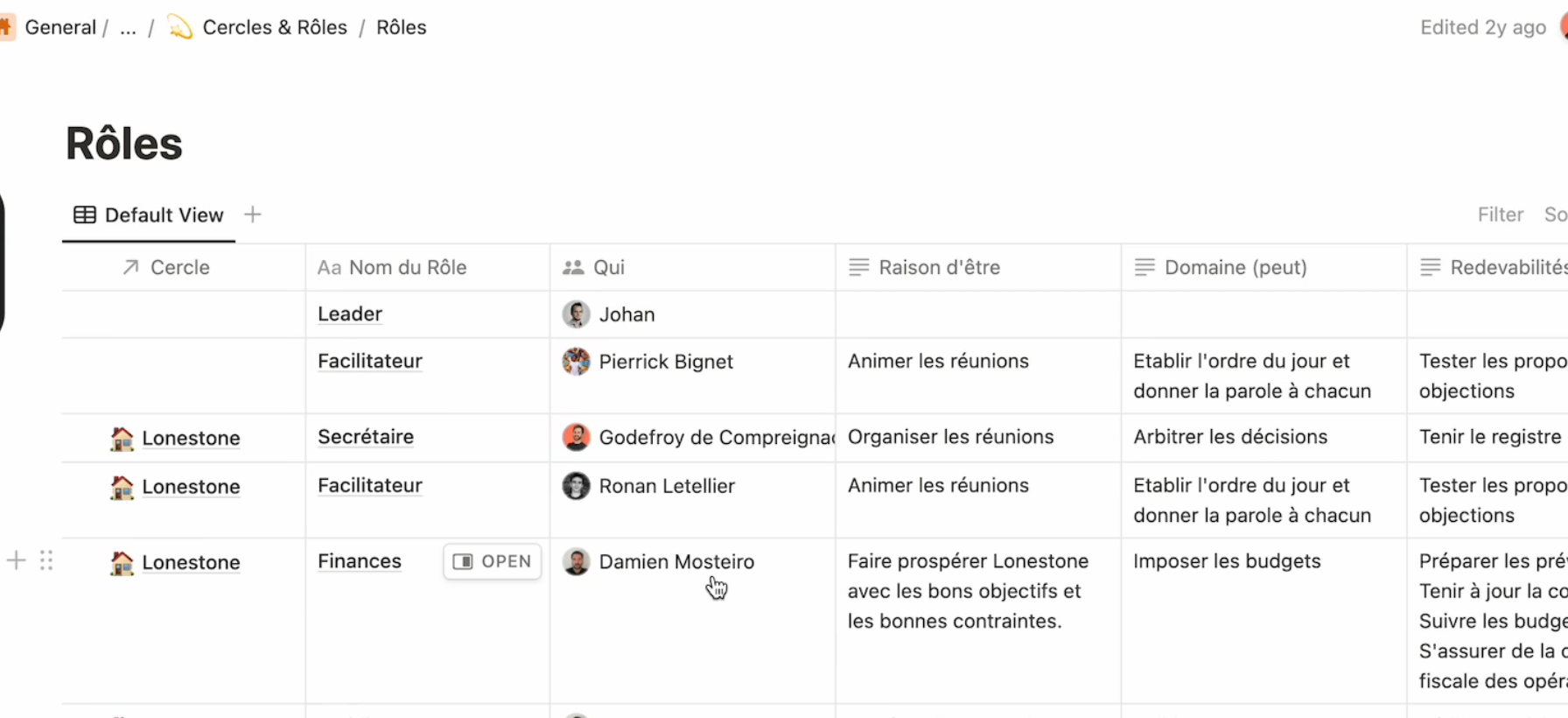
Things were getting confusing in Notion. We couldn't find our way around anymore, we couldn't see who does what. Despite the teams' commitment, we had reached Notion's limits.
Godefroy de Compreignac, Co-founder
The Solution
Godefroy built Rolebase to address the challenges faced by Lonestone's teams, as well as those of other companies using horizontal management approaches.
Today, all roles and skills are visually represented. Rolebase has become an essential tool during recruitment to help candidates see where they fit, and then during onboarding to help them quickly understand each team member's and team's scope.
Meetings are easily organized through the tool. Minutes are prepared and an AI summary is generated in one click. Everything is searchable or visible in the team's news feed.
Everything is in place so that experts can focus on their core work rather than administrative coordination tasks.
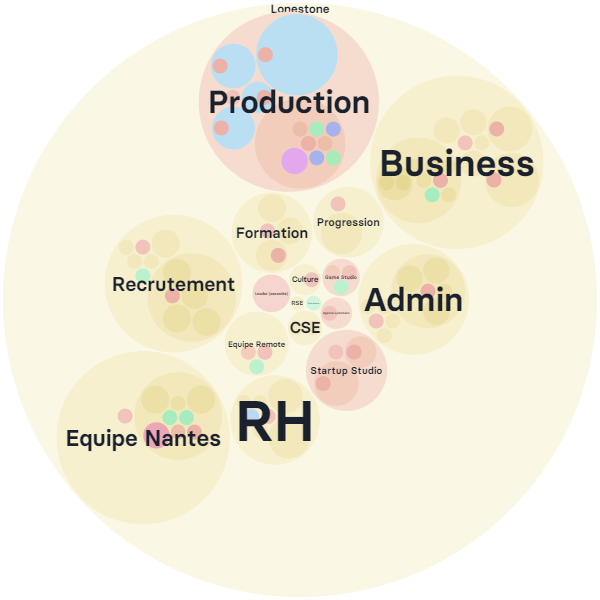
I see a real difference in how candidates project themselves during recruitment, and then during onboarding. After just one week, it's as if they had been with the company for years.
Pierrick Bignet, Co-founder
Read the article on the EVEA blog about how Rolebase supports their shared governance.